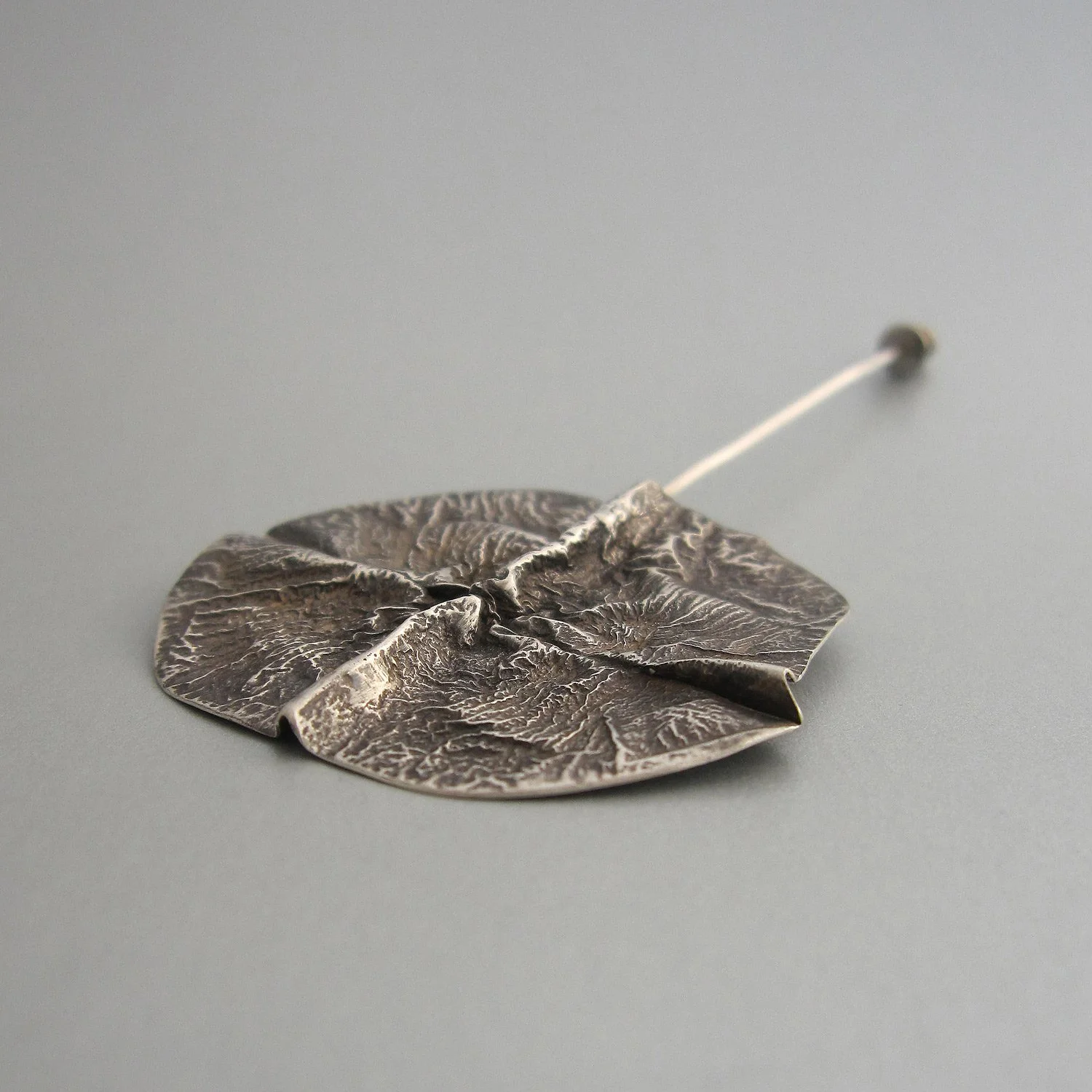
I get asked every so often how I first stumbled into the world of metal jewelry, so I thought I’d share the story here on the blog. It wasn’t planned— it was simply one small decision that opened a door I didn’t know I’d been looking for.
A Class That Changed Everything - It started when I signed up for an extension metalsmithing class at UCLA. I didn’t have expectations or a grand artistic vision. I just felt curious. On the very first day, my instructor placed a small silver ingot in my hand and showed me how to cut it with a jeweler’s saw. That moment hooked me instantly. Working with metal felt grounding, almost meditative.
Falling Down the Rabbit Hole of Tools- Once I realized how much I loved it, I did what any newly obsessed maker does: I started collecting tools. A bench pin, jeweler’s saw, blades, a small torch, beeswax, pliers, files, solder, flux, a pickle pot, brushes, a vise, a third hand, a ring mandrel, a rawhide hammer, and eventually a whole assortment of other tools I didn’t know existed before.
Learning From Books, Artists, and Anyone Who Would Teach Me - I devoured every metalsmithing book I could find. I signed up for a couple more seminars with artists whose work inspired me, eager to understand their techniques.
And that’s how it began. There was no dramatic turning point — just one class, one tool, one silver ingot, and a spark that never went out. What started as curiosity became a craft, a practice, and eventually a part of what I do.
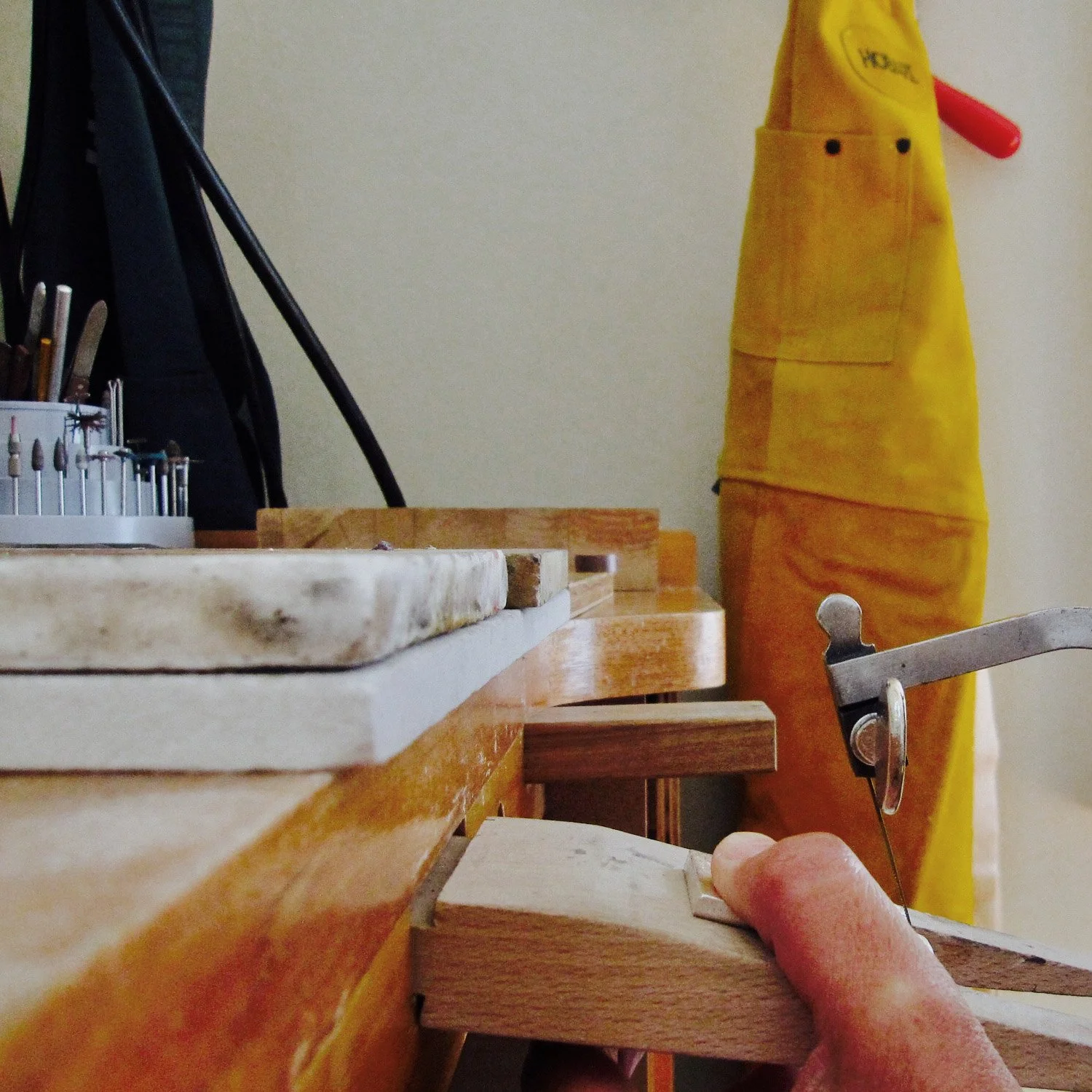
Maddalena Bearzi at the jewelry bench with an ingot of silver and a saw